Environmental Agency Reminds Entrepreneurs of Importance of Environmental Approval
Reported by Aldi Geri Lumban Tobing | Translated by Nugroho Adibrata
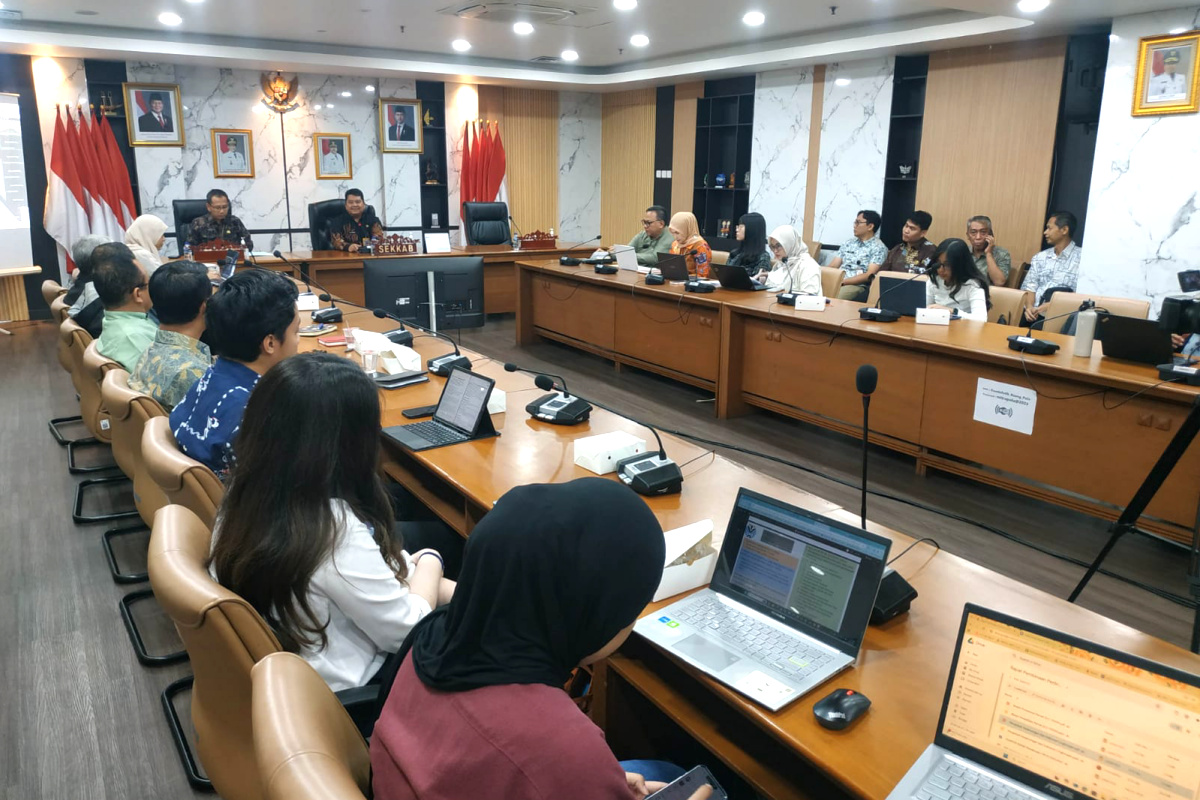
The Jakarta Environmental Agency reminds all business actors, from big to small scales, to meet the obligations of preparing Environmental Approval (Perling), Technical Approval (Pertek), and Operating Feasibility Letter (SLO) in a bid to uphold the shared commitment to environmental preservation.
This step is crucial to prevent ocean pollution
Jakarta Environmental Agency Head, Asep Kuswanto said, environmental approval is not just an administrative requirement for obtaining business permits, but also a tangible commitment to maintaining the quality of the environment and cleanliness.
"Do not see this document as a burden, but rather as a guide so that economic development and environmental sustainability can go hand in hand in Jakarta," he expressed, Friday (9/12).
Small Food Business Becomes More Environmentally FriendlySeribu Islands Environmental Sub-agency Acting Head, Dadang Cahaya Ruadiana added, environmental approval must be prepared before construction and operation to avoid harming the community and the environment.
He hoped that entrepreneurs' awareness of the importance of environmental documents would continue to increase, thus business activities in Seribu Islands could proceed in harmony with marine conservation, coastal ecosystems, and the health of communities whose lives depend on natural resources.
Environmental Impact Controller from PDLUK Directorate, Vincensia Tasha Devi explained, there are three types of environmental approvals based on their impact: Amdal, UKL-UPL, and SPPL. The business responsible parties can conduct self-screening based on the scale and magnitude criteria and the location of the business and/or activity.
"The entire process is conducted during the planning stage, taking into account the conformity of spatial arrangements and regulations," he added.
Coastal and Marine Pollution Control Working Group Coordinator at KLH, Djurit Teguh Prakoso, added efforts or activities that generate waste, emissions, B3, and have the potential to disrupt traffic need to prepare a Technical Approval. For instance, businesses in Seribu Islands that discharge waste into the sea are required to have a Wastewater Discharge Permit to the Sea.
Then, after the wastewater treatment plant (WWTP) is completed, the government will conduct a field verification and issue an Operational Feasibility Letter (SLO) if the wastewater quality meets the standards, as proof that the facility is fit to operate.
"This step is crucial to prevent ocean pollution," he stated.